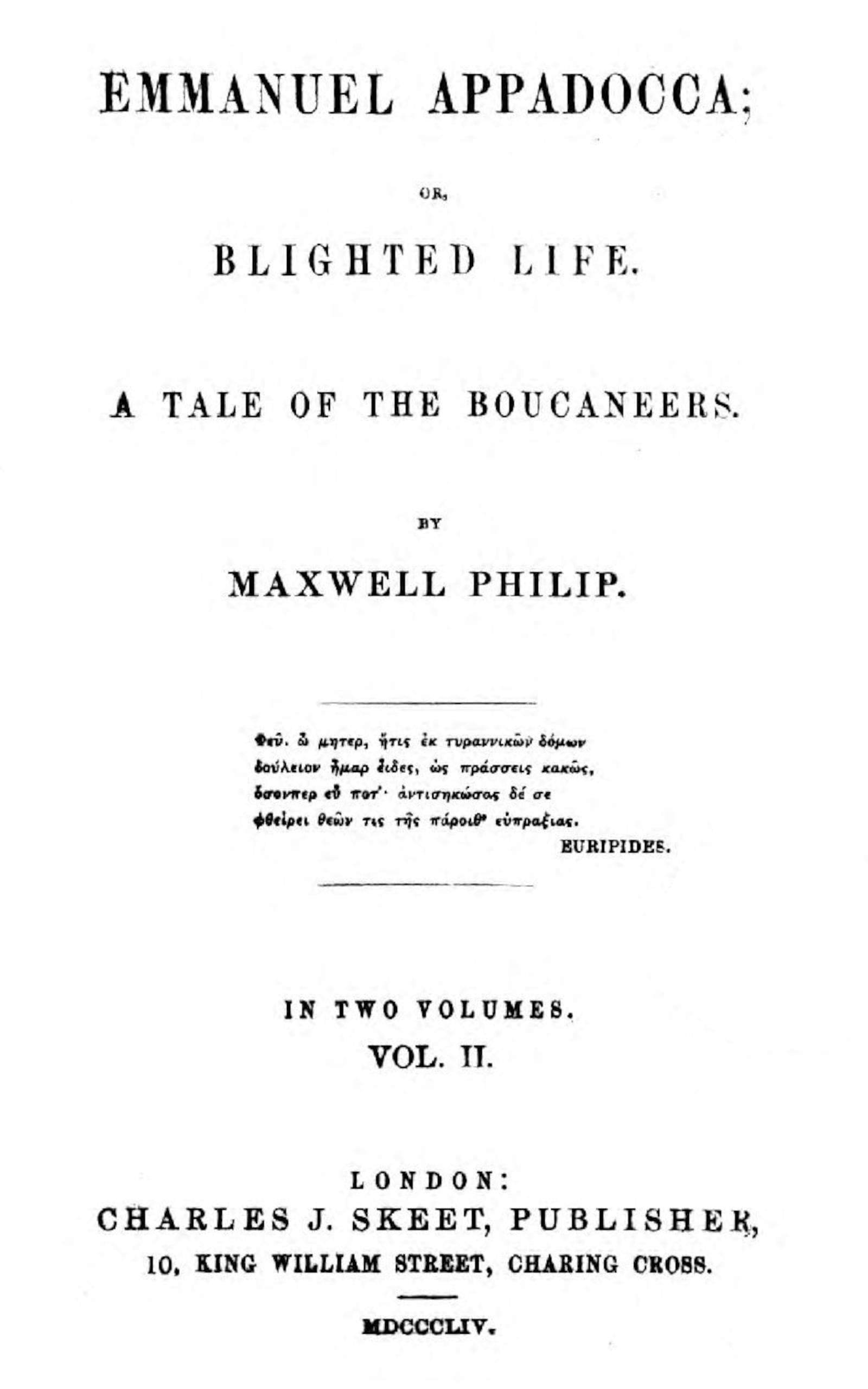
Emmanuel Appadocca; or, Blighted Life, Volume 2 (of 2)
by Maxwell Philip · 1854
Historical Fiction · Classics
The second and last volume of Maxwell Philip's 1854 novel of the buccaneer captain Emmanuel Appadocca, continuing from Chapter XVI to the end of the story. Philip, who was born in Trinidad, set most of the action in the waters and on the island he loved.
Content note: Written in 1854, this novel is about slavery and racial prejudice, and includes piracy, duels and violence. It uses language of its time that is outdated or offensive today. Read Volume 1 first.
17 chapters